
MICROBIAL
FERMENTATION
A simple, scalable process aligned to food ingredient manufacturing
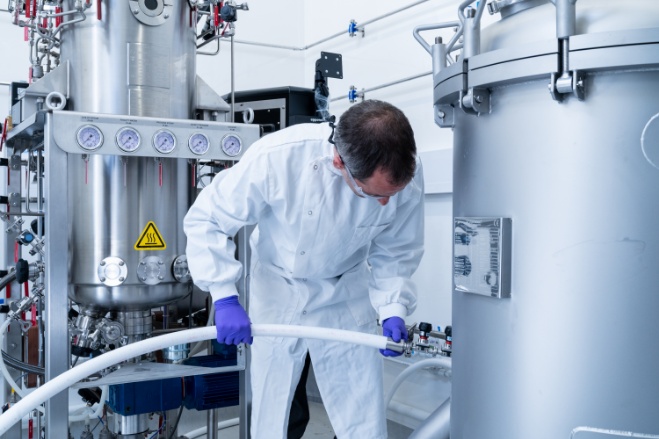
Microbial fermentation is simply the production of biomass or a biomass-derived product through controlled growth of a defined microorganism in a reproducible, scalable, fully enclosed, sterilisable fermentation vessel. This process is used to produce mycoprotein as well as being part of the process that results in the production of beer, cheeses and yoghurts as familiar exemplars. In most cases, a source of energy in the form of liquid glucose is used to support the growth of the desired microorganism.

Highly productive
When Chlorella species are grown by fermentation, they are most often grown in the dark without the need for any light. This allows them to grow to much higher biomass densities, with > 100 grams per liter being routinely attainable. Chlorella species will rarely achieve biomass densities above 5 grams per liter and will, more typically be harvested at around 1-2 grams per liter when grown photosynthetically using either natural or artificial light.
Production of Chlorella by microbial fermentation is able to produce 2 to 3 orders of magnitude (100x to 1000x) greater amounts of biomass per unit volume per year as compared to light-dependent production. This strongly aligns production of white Chlorella by high productivity microbial fermentation with the volume and supply chain expectations of mainstream food and beverage markets.
Future food systems
Microbial fermentation plants can be sited flexibly on a global basis in country to support the supply into local food systems avoiding supply chain challenges while also underpinning and enabling the delivery of more sustainably manufactured foods. The liquid glucose feed is most often derived from the starch residue resulting from wheat or maize processing but, technically, glucose can even be generated from agricultural wastes.
In addition to the culture density advantage, microbial fermentation supports year-round, seasonally independent production as well as being highly controlled and contained with easier to clean production systems. Our expertise in microbial protein production allows us to create scalable, year-round supplies of White Chlorella.
